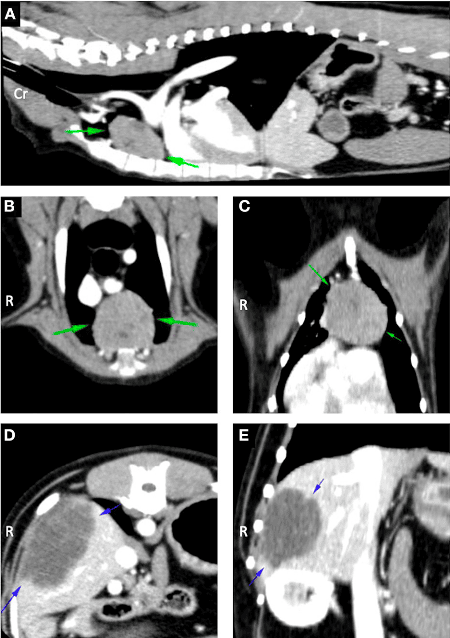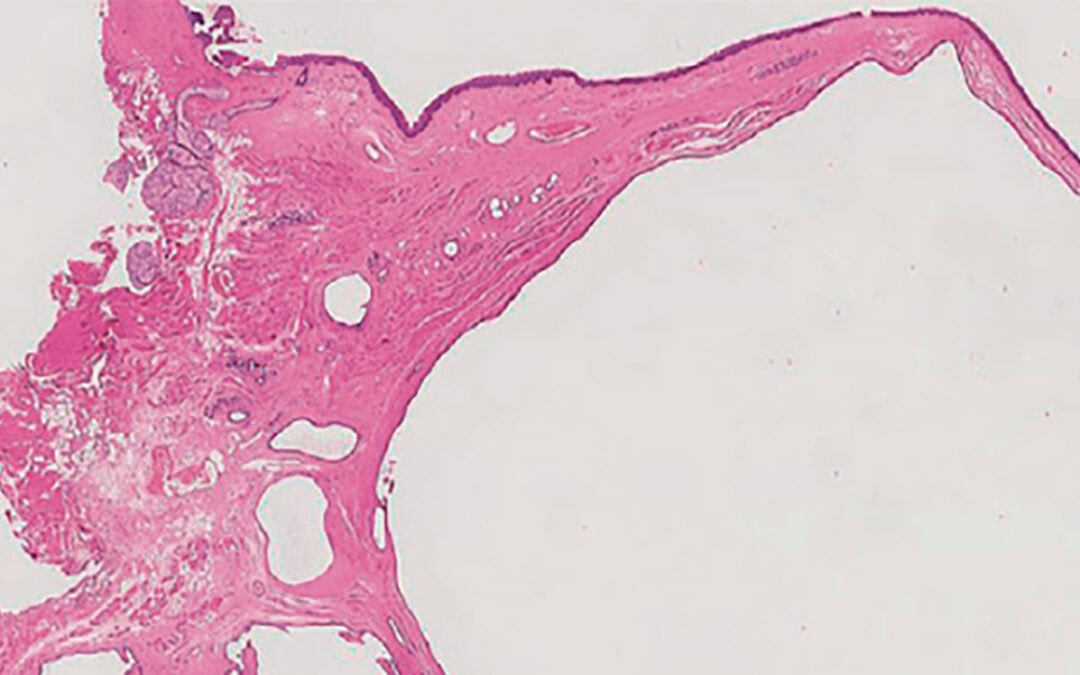
What is a portosystemic shunt (PSS)?
A portosystemic shunt (PSS) is an abnormal blood vessel that allows blood from the intestines and other abdominal organs to bypass the liver and flow directly into the general circulation. Because the liver plays a vital role in filtering toxins, processing nutrients and supporting metabolism, this bypass can have widespread effects throughout the body.
PSS is the most commonly diagnosed congenital liver disorder in dogs. In most affected dogs, a single abnormal vessel is present, which may occur either outside the liver (extrahepatic) or within the liver (intrahepatic). Less commonly, dogs may have acquired multiple shunts.
Which dogs are affected?
Any dog can be affected by a portosystemic shunt (PSS), although certain breeds are predisposed. Small breeds, including Yorkshire Terriers, Maltese, Havanese, Pugs and Miniature Schnauzers, are more likely to develop extrahepatic portosystemic shunts (EHPSS). In contrast, larger breeds such as Irish Wolfhounds, Labrador Retrievers, Golden Retrievers and Australian Shepherds are more commonly affected by intrahepatic portosystemic shunts (IHPSS).
When do signs of PSS appear?
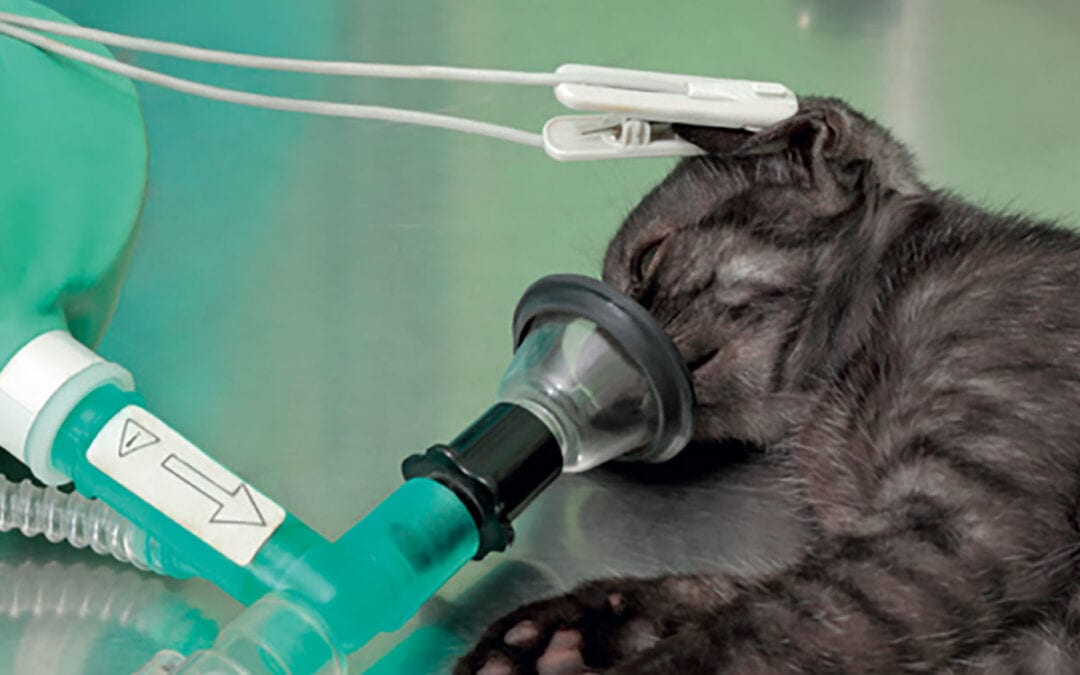
Clinical signs vary depending on the proportion of blood that bypasses the liver and most commonly affect the nervous, gastrointestinal and urinary systems. Neurological signs, a manifestation of hepatic encephalopathy, may include lethargy, behavioural changes, head pressing, staring into space (“stargazing”), seizures or blindness. Gastrointestinal signs can include vomiting, diarrhoea, reduced appetite and dark, tarry stools (melena), which are reported in approximately 30% of affected dogs. Urinary signs may include increased drinking and urination (polyuria/polydipsia or PU/PD), difficulty urinating (dysuria), blood in the urine (haematuria) and urinary stone formation. Many affected dogs are also described as having failure to thrive, meaning they remain smaller than expected for their age and breed or may have an increased sensitivity to anaesthesia.
How is PSS diagnosed?
Abdominal ultrasound or CT angiography are the most commonly used diagnostic tools to identify a portosystemic shunt.
What is the treatment for PSS?
Surgical attenuation is the treatment of choice for most dogs with a congenital portosystemic shunt (PSS). Medical management is typically initiated at the time of diagnosis to help control clinical signs and stabilise affected dogs, but it does not correct the underlying vascular abnormality. Studies have shown that long-term outcomes are generally superior in dogs treated surgically compared with those managed with medical therapy alone. For this reason, medical management is usually reserved for dogs that are not suitable candidates for surgery or as a temporary measure before surgical treatment.
Take-home message
Congenital PSS is a condition that can often be successfully managed, and surgical attenuation offers the best chance of a favourable long-term outcome in most dogs. Early diagnosis, appropriate stabilisation and timely referral are important factors in improving prognosis and quality of life. However, outcomes can vary, and despite appropriate treatment, complications can occur.
One of our most cherished patients sadly passed away as a result of this condition despite receiving treatment. His owner has kindly shared his story to help raise awareness of PSS and support other owners whose pets have received the same diagnosis. You can read his story below.
Mikey’s Story
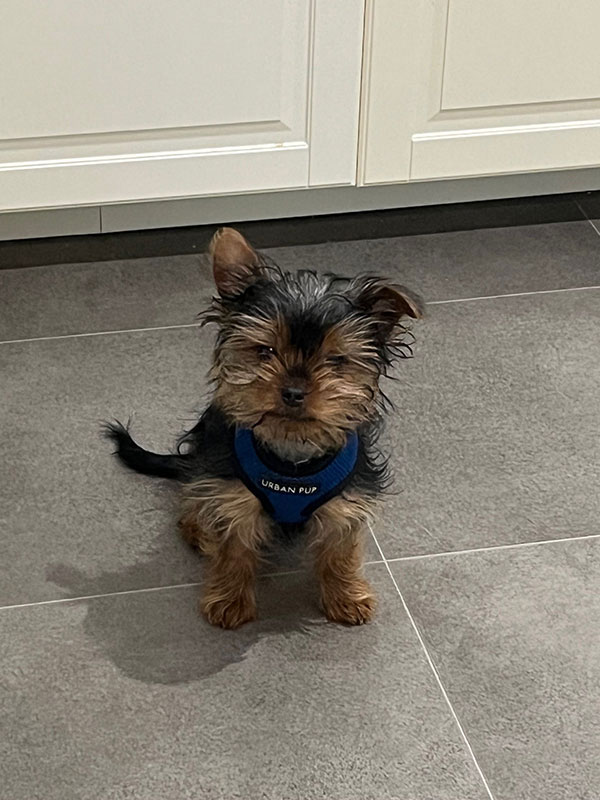
Mikey as a puppy
They say that a dog is a man’s best friend, and right from the beginning that was the case with Mikey. He was a playful puppy, the cutest Yorkshire Terrier you might ever meet and the star of the show at puppy training classes. His arrival always made people smile as he jumped out of his puppy rucksack ready to start the week’s lessons. He passed all his training tests, but it wasn’t long before he started exhibiting behaviour that, although I didn’t realise at the time, was classically symptomatic of a dog with a liver shunt. Whenever an animal we love is in distress, it’s heartbreaking; when it’s a cute little puppy it somehow seems to hurt even more.
Following Mikey’s diagnosis, we started on the journey of living day to day with his condition. Administering medication several times a day became engrained in my daily life, and my routine had to be geared around his needs. There was nothing I wouldn’t do for “my boy” and although surgery to correct the shunt was an option from the start, the thought of what Mikey would have to go through along with the risk any surgery presents meant that I opted to manage his condition with medication.
With a few minor setbacks from which he very quickly bounced back, this initially worked well. But as he grew older, the trips to the vet became more frequent and his recovery from any relapse took longer. Nursing him through any episode can be traumatic and after one particularly bad occasion where I nearly lost him, the advice was to give him the best chance of a normal life, and he should have the surgery to correct the shunt.
The build up to his operation was spent administering enhanced medication, sometimes 8 times a day to get him as well as possible. Getting Mikey fighting fit took several weeks and during this time, I did much soul searching. Was I doing the right thing? Especially considering how he was now in the best shape he had been for some time. Seeing him so well made me question if he really needed the operation, but at the end of the day I made the tough decision to let him have the operation believing this would give him the best chance of a normal life.
The nearer we got to the date for Mikey’s op, the more nervous I became. I spent time doing even more with him than usual and looking back, I’m really glad I did. On the day, the op went well and Mikey was allowed home a day early as he was “as bright as a button”. Initially, he seemed to be his usual cheeky self. Sadly, this euphoria didn’t last long, and he was soon back at Dovecote receiving specialist care from Clara and the team. I went to see him daily and was eventually told I would be able to take him home.
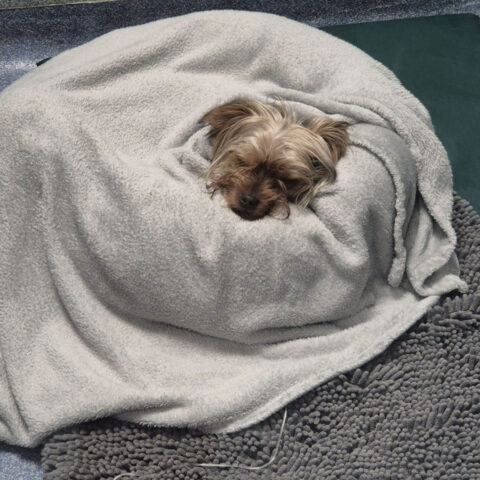
Mikey sleeping
Unfortunately, on the morning he was due to come home he suffered a fit, a day after passing the milestone beyond which this was less likely to happen, and he had to be placed into an “induced coma” to give him the best chance of a recovery. This was the start of a waiting game as he needed to remain sedated for a few days after which the plan was to slowly bring him back to consciousness and see how he faired.
His recovery slowly progressed, but not without several setbacks, each of which he seemed to overcome – until unexpectedly he passed away a few hours after I had seen him, not knowing this would be for the last time.
The team did everything they could to help Mikey recover from the post-operative setbacks. I’m sure he also tried as hard as he could but at the end of the day it wasn’t to be. In the aftermath of his death, I questioned myself over and over again whether I had done the right thing. You research as much as you can, assess the odds and ultimately have to make what was for me one of the hardest decisions of my life. In your mind you go over the scenarios and come to a decision that you hope will be right, daring to dream that your beloved pet will at last be able to lead a normal life. It is not wrong to do this, but you must not ignore the real possibility that it won’t go to plan, that you might lose your pet and do so under traumatic and heartbreaking circumstances.
Mikey didn’t deserve to be born broken and deserved the chance of the normal life we tried to give him. Looking back, knowing what I know now I obviously wish things could be different, but strangely still think giving him this chance was the right thing to do. I’ve come to terms with what I put him through because I know deep down I did it for the right reasons. It was especially hard that he was in the best shape he’d been in readiness for his operation, but at least that allowed us to build some happy memories that I will cherish for as long as I live. I also tried my hardest, from the point I became aware he had a potentially life-limiting condition, to give him as many experiences in the all-too-short time we were together, which also helped me to come to terms with losing him too soon.
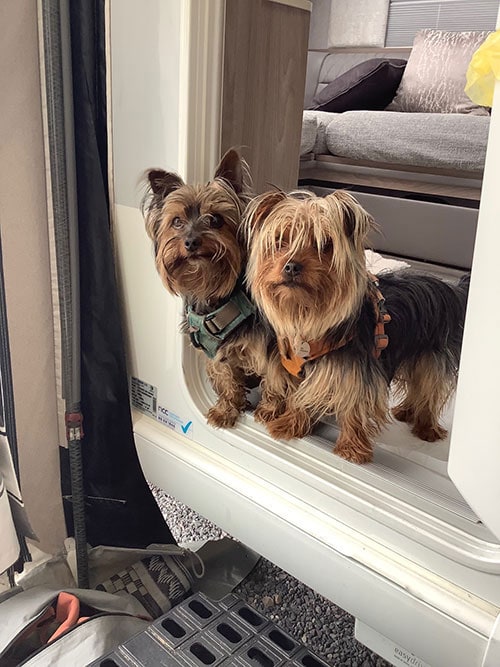
Mikey enjoying life